
Most of us want our parents to stay in their own home for as long as they can, and most parents want the same thing. The tricky part is noticing when the house isn't working for them anymore. Often you'll see it during a holiday visit or a Sunday dinner, in small habits that weren't there a few years ago.
Falls are what we worry about most. They cause about 85% of injury-related hospital stays for Canadians over 65, and half of those falls happen at home. The changes that help are usually small and quick, and much easier than a move.
The next time you visit, we suggest watching for these five things.
Practical Takeaways
- Watch how your parents move around the house, not just how the house looks.
- The bathroom and the stairs are where small changes help the most.
- Grab bars, a second handrail, lever handles and brighter lighting are simple updates that make a big difference.
- Check the smoke and carbon monoxide alarms, including how old they are.
- Make decisions with your parents, not for them.
1. They hold onto furniture and walls to get around
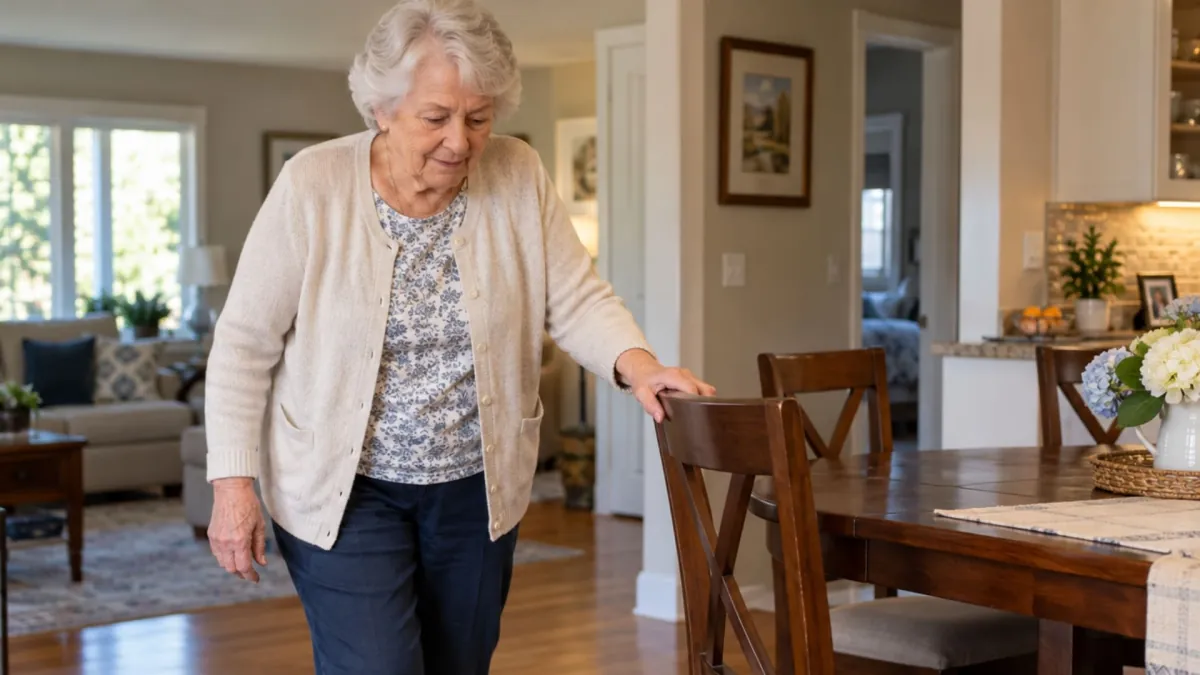
Watch how your mom or dad walks across a room. If they reach for the back of a chair, the kitchen counter or a door frame as they go, they're using the furniture to keep their balance. It's easy to miss, because it usually starts slowly.
We'd begin with these changes:
- Add a sturdy handrail along a hallway or on the way from the bedroom to the bathroom.
- Clear the paths between rooms so there's nothing to step around.
- Take up loose rugs, or put non-slip pads under the ones they want to keep.
- Move light furniture they might lean on, like side tables and plant stands.
A wobbly chair, a towel bar or a door handle isn't something anyone should lean on.
2. The stairs are getting harder
Some parents stop going to the basement or upstairs altogether. Others take the stairs one step at a time, holding the railing with both hands. Either way, we'd make the stairs a priority.
Let’s start with the railing. You lean on it. It shouldn't move at all. We also recommend a handrail on both sides of the stairs, so your parent can hold on with their stronger hand going up and coming down. A loose railing usually just needs its brackets screwed back into the studs, and adding a second one is a simple carpentry and trim job.
Now’s the lighting. There should be a light switch at the top and the bottom of the stairs, and brighter bulbs help a lot. Worn carpet, loose treads and anything stored on the steps should go.
3. They're having trouble in the bathroom
We see a lot of falls happen in the bathroom. The floor gets wet, the surfaces are hard and sitting down and getting back up takes effort.
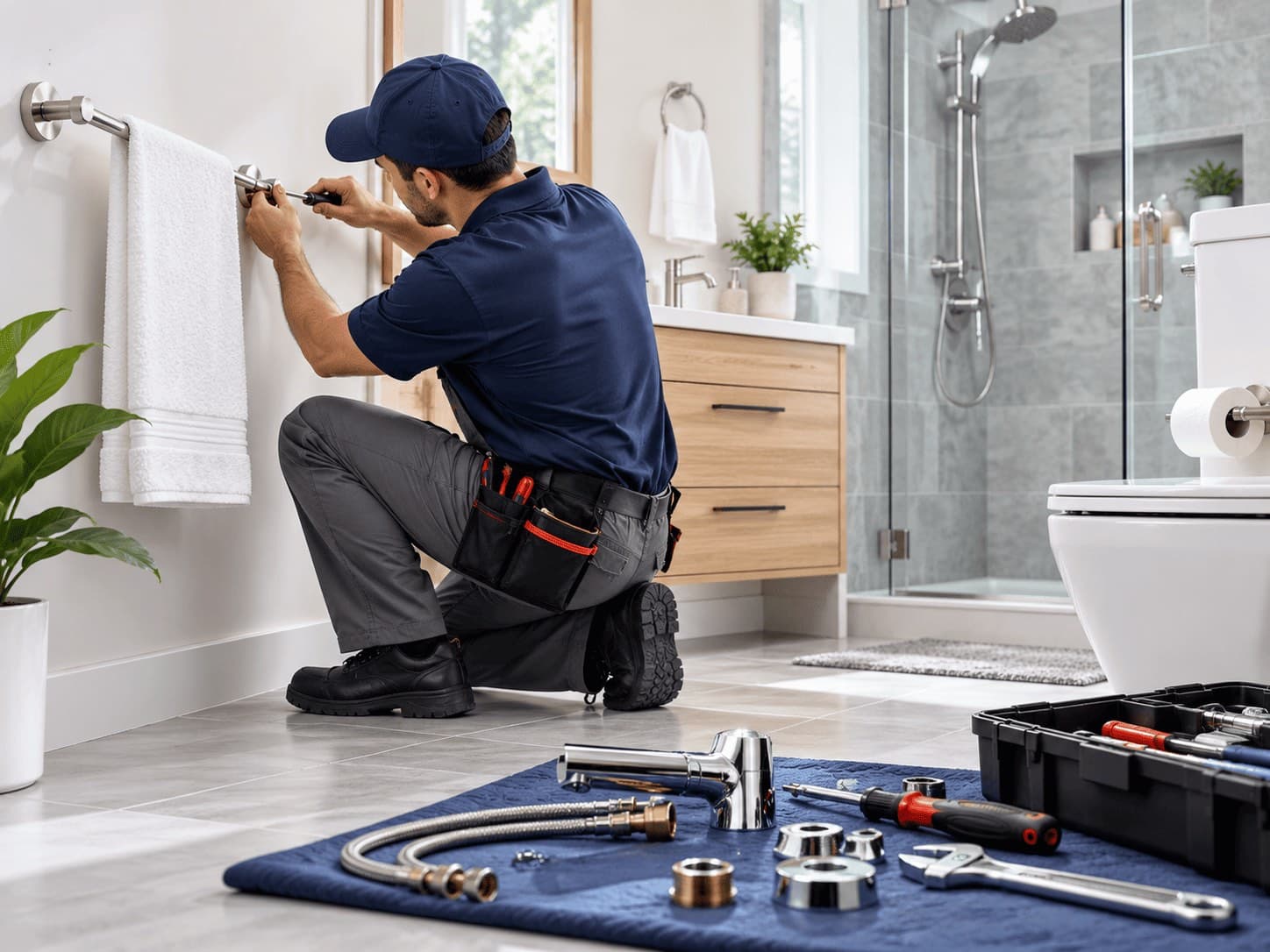
You might notice your parent spends longer in the bathroom, only takes showers now or pulls themselves up using the towel bar or the edge of the sink. Towel bars and sinks aren't made to hold a person's weight, and they can come right off the wall.
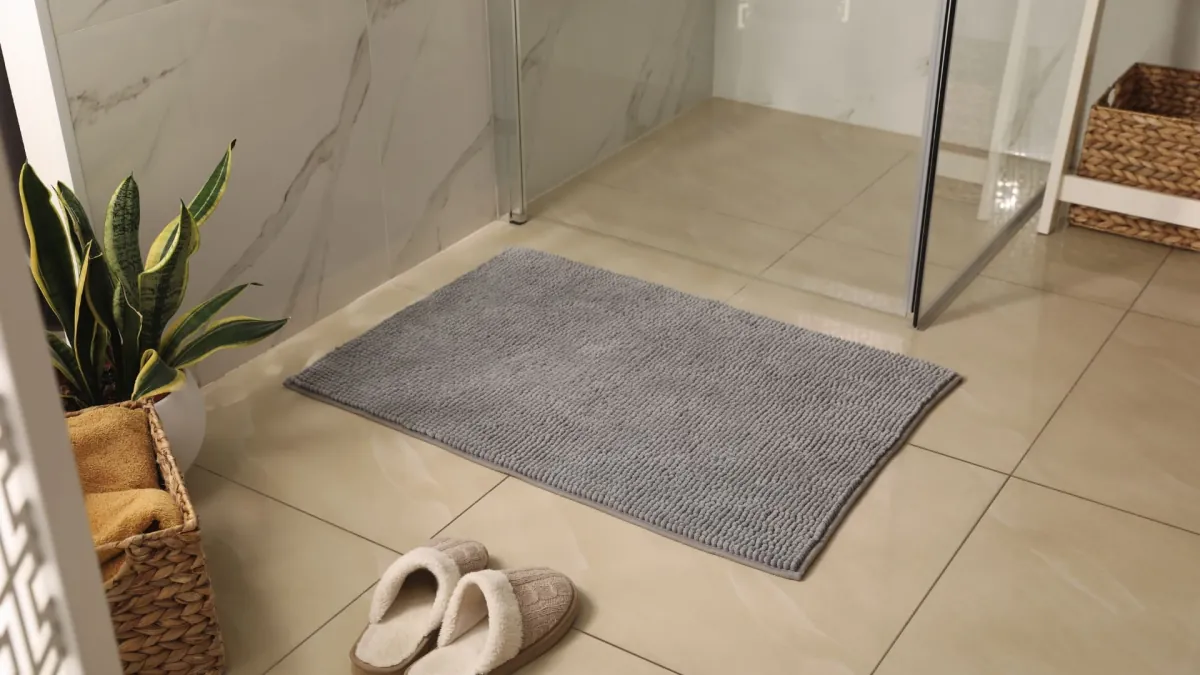
Grab bars fix most of this. We suggest one beside the toilet and one in the tub or shower, so your parent has something solid to hold when they sit, stand or step over the tub edge. Unlike most bathroom accessories, grab bars have to be screwed into studs or solid backing. A non-slip mat, a shower seat and a handheld shower head help too.
4. Door knobs and taps are hard to use
If your parent has arthritis or a weaker grip, round door knobs and small cabinet knobs can be a daily struggle. You might see them use two hands to open a door, leave cabinets open so they don't have to deal with them or avoid a certain tap.
Lever handles are one of the easiest fixes. You can open a lever with an elbow or a closed hand, which also helps when your hands are full. Bigger pulls on cabinets and lever-style taps make the same difference. It's a quick hardware update, and the house still looks and feels like theirs.
5. The smoke and carbon monoxide alarms are old, missing or chirping
Alarms are easy to forget about until something goes wrong. Your parents may not be able to reach the ceiling to test them, and they may have pulled the battery out of one that kept chirping.
When you visit, make sure there's a working smoke alarm on every floor and outside the bedrooms. If the house has a gas furnace, a fireplace or an attached garage, there should be a carbon monoxide alarm near the bedrooms too. Press the test button on each one, then check the date on the back. You should replace smoke alarms every 10 years, and if there's no date, it's probably older than that.
If your parent has trouble hearing, look for alarms with a flashing light or a louder sound.
How to bring it up
Talking to a parent about safety can feel awkward. Nobody wants to hear that they can't manage their own home.
We find it goes better when you ask first. What's been bugging them around the house? Is anything harder than it used to be? Then talk about changes as ways to make things easier, not as a sign something is wrong. Start with one or two small things. A grab bar and a second railing are easy to say yes to.
If they're coming to stay with you over the holidays, take a look at our holiday hosting safety checklist so your home is ready for them too.
Get a second set of eyes
Sometimes it helps to have someone else look at the house with you. With a BQHS Home Health Check, one of our technicians checks the stairs, railings, smoke and carbon monoxide alarms and bathroom fixtures, then gives you an easy-to-read report you can go over with your parents. It also makes a thoughtful gift, and it lets them hear it from us instead of from you.
Disclaimer: This article is general information for families and homeowners, not medical advice. Grab bars and railings must be installed to support a person's full weight. For concerns about mobility, balance or health, talk to your parent's doctor or an occupational therapist, who can recommend changes specific to their needs.
Frequently Asked Questions
- How can I make my parents' home safer?
- Start with the bathroom and stairs. Add grab bars by the toilet and tub, make sure stair railings are solid (ideally on both sides), improve lighting, remove loose rugs and check that smoke and carbon monoxide alarms work.
- What are the most important safety updates for seniors at home?
- Grab bars in the bathroom, solid handrails on both sides of the stairs, good lighting with night lights, non-slip surfaces and working smoke and carbon monoxide alarms.
- Where should grab bars be installed?
- Beside the toilet and in the tub or shower area, where your parent sits, stands and steps in and out. They must be anchored into studs or solid backing.
- Are lever door handles better for seniors?
- Yes. Levers are easier to open for anyone with arthritis or a weaker grip, and they can be opened with an elbow or a closed hand.
- How often should smoke alarms be replaced?
- Every 10 years. Check the manufacturing date on the back of the alarm, and test each alarm monthly.
- How do I talk to my parents about home safety?
- Ask them what's been hard around the house first. Talk about changes as ways to make things easier, and start with one or two small updates instead of a long list.