
Two drywall repairs can look about the same size and still come with very different quotes. A hole behind a door and a stain on the ceiling might both be the size of your hand, but one is a quick patch and the other may mean opening the ceiling to find a leak.
We don't think a price list is very useful here, because every job is different. What helps more is understanding what actually moves the cost, so you know what to expect and what questions to ask when you get a quote.
Practical Takeaways
- The cause of the damage matters more than the size. Water damage costs the most because the source has to be fixed first.
- Ceilings cost more to repair than walls, and textured finishes cost more than smooth ones.
- Drywall repairs usually need more than one visit, because each coat of compound has to dry.
- Grouping several repairs into one job almost always costs less than booking them one at a time.
- Small nail pops and holes are reasonable DIY jobs. Ceilings and water damage are best left to a pro.
How the three most common repairs compare
| Repair | What's involved | What drives the cost |
|---|---|---|
| Nail pops | Resetting the fastener, adding a screw, filling and touching up paint | How many there are and whether they're on the ceiling |
| Holes and dents | Small holes are filled; larger holes need a patch or a new piece of drywall, several coats of compound and sanding | Size, location, how many there are and how hard the paint is to match |
| Water damage | Fixing the leak, drying the area, cutting out damaged drywall, checking insulation, then replacing and finishing | The cause, how far the water spread and whether there's mould |
Nail pops: small, but often many
Nail pops are small bumps where a nail or screw has pushed the drywall out. They're very common in new homes, because the wood framing shrinks as it dries in the first year. If you're in a new build, it's normal to see a few nail pops during your first winter.
Each one is a small job. The cost comes from the number of them, whether they're on the ceiling and how much painting is needed afterwards. That's why we suggest waiting and fixing them all at once, rather than one at a time as they appear.
Holes and dents: size and location matter
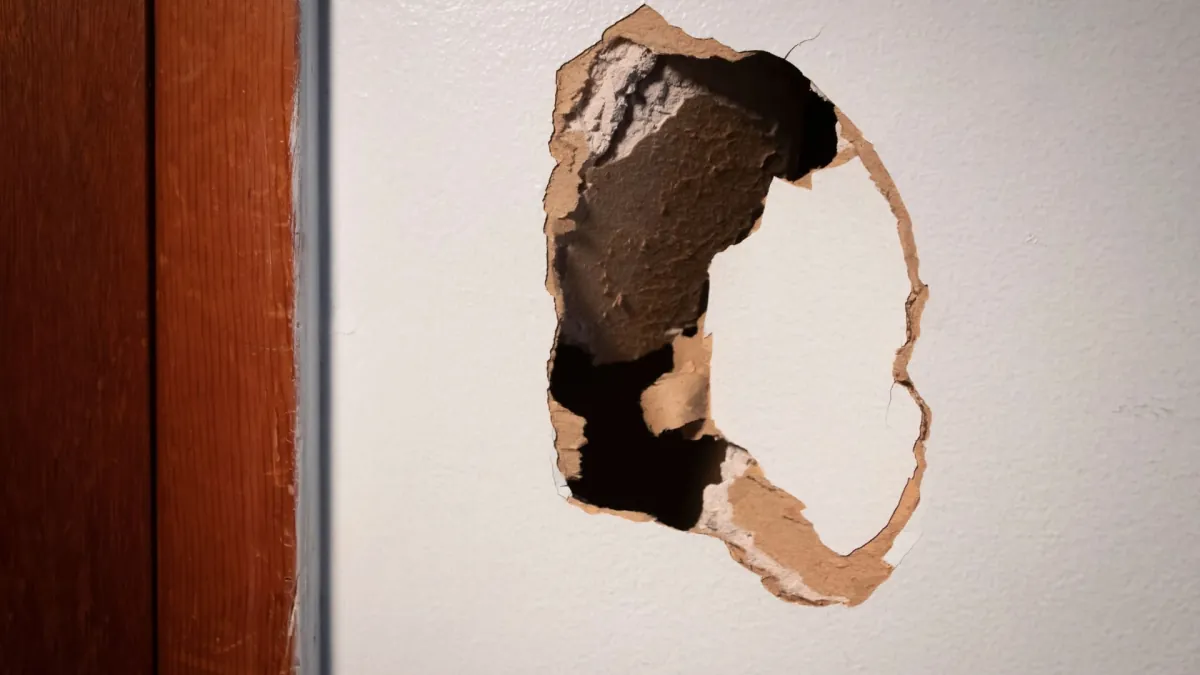
A small hole from a nail or a drywall anchor is a quick fill. A hole from a doorknob, a moving mishap or an anchor that pulled out of the wall is a bigger job. Anything larger than a few centimetres usually needs a patch or a new piece of drywall, then several coats of compound, sanding between each one.
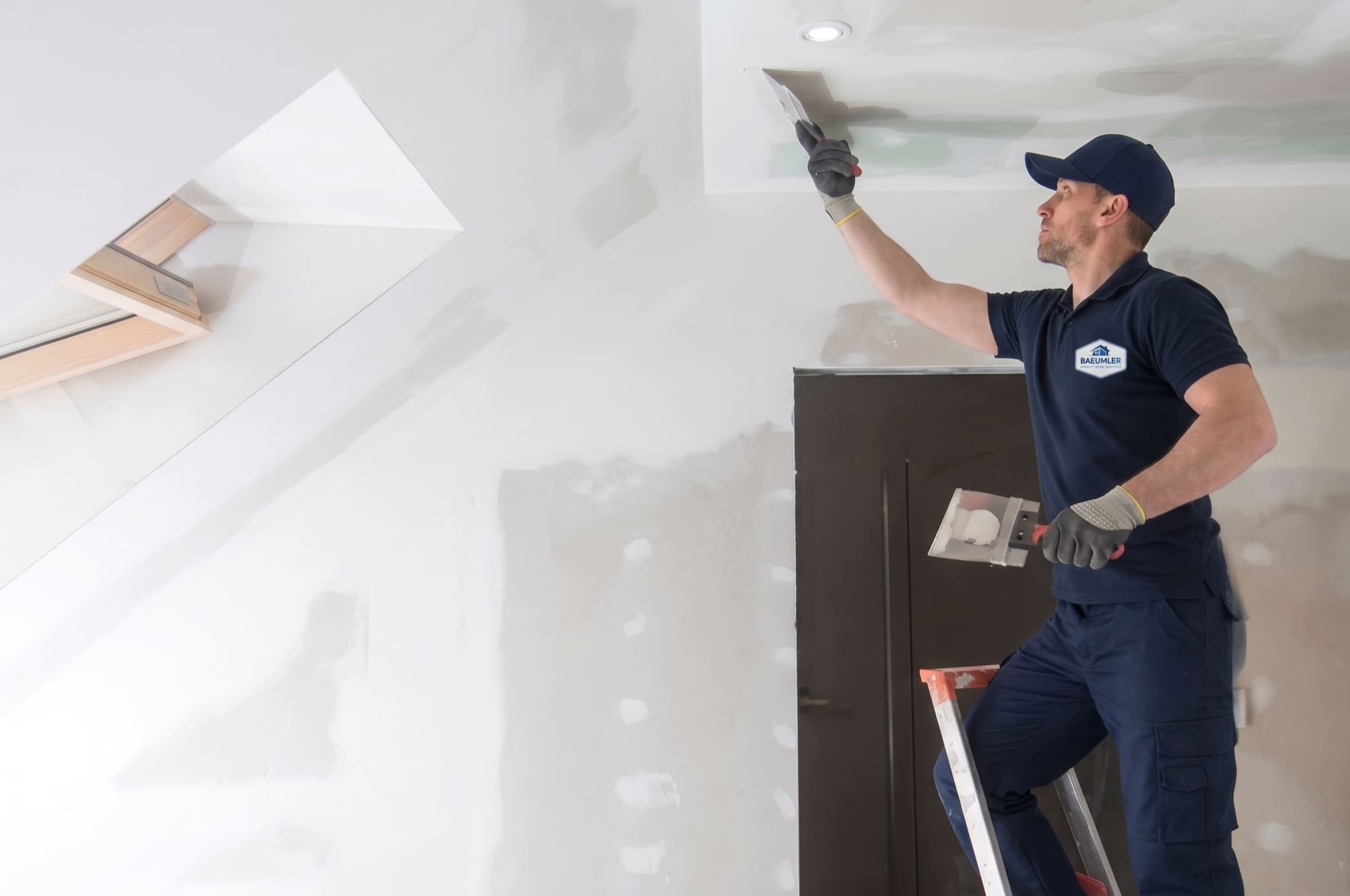
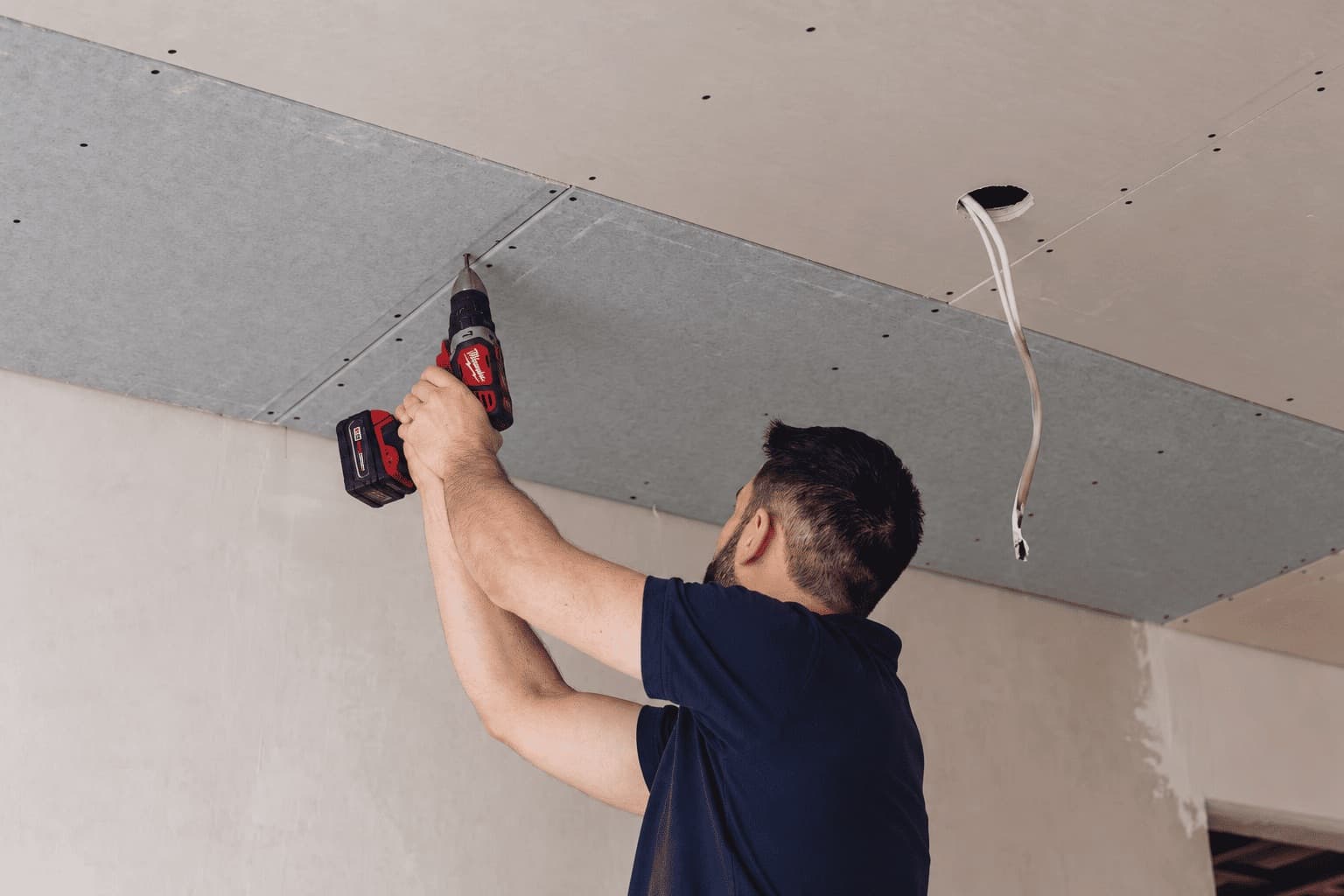
Location matters just as much as size. Repairs on a flat, open wall are the simplest. Corners, ceilings, stairwells and areas behind fixtures take longer and may need ladders or scaffolding.
Water damage: the cause comes first
Water damage is the most expensive type of drywall repair, and it's also the hardest to estimate before work starts.
The drywall is usually the last step. First, someone has to find and fix the source, whether it's a leaking pipe, a bathroom above, a roof issue or an ice dam. Then the area has to dry out completely. Wet drywall usually has to be cut out, and the insulation behind it may need to be replaced. If there's mould, that adds another step.
Once it's dry and the cause is fixed, the ceiling and drywall repair itself is often straightforward. If you notice a stain on a ceiling or wall, deal with it early. A small, fresh stain is much easier to fix than one that's been spreading for months.
Other things that affect the price
Beyond the type of damage, a few other things affect your quote:
- Matching the finish: smooth walls are easiest. Textured or popcorn ceilings are harder to match, and patches can show if the texture isn't blended in.
- Matching the paint: even with the same colour, a patched spot can look different from the rest of the wall. Often the best result is repainting the whole wall, from corner to corner.
- Drying time: joint compound needs time to dry between coats, so most drywall repairs take more than one visit.
- Prep and access: moving furniture, protecting floors and working around fixtures all take time.
- Labour and materials: renovation prices are still rising. Across 15 major Canadian cities, they went up 2.3% over the past year.
DIY or call a pro?
Small nail pops and nail holes are good DIY jobs. With a putty knife, some spackle and a little patience, most homeowners can get a good result.
For anything on a ceiling, larger holes, textured finishes or any sign of water damage, we recommend calling a pro. Ceiling work is hard to do well from a ladder, and water damage often hides more than you can see.

Getting more out of one visit
Because drywall repairs need multiple coats and drying time, setting up the job is a big part of the cost. Grouping your repairs makes a real difference. If you have a few nail pops, some scuffed walls and surfaces and a hole behind a door, fixing them all in one job costs less than booking three separate visits.
This is also where a BQHS membership helps. Members get a discount on follow-up work like drywall repairs, and one of our technicians can flag small issues during regular visits before they turn into bigger ones.
Disclaimer: This article is general information for homeowners. Every repair is different, and the only way to know the cost of your repair is to get a quote. If you see signs of water damage or mould, have the source checked by a qualified professional before repairing the drywall.
Frequently Asked Questions
- How much does drywall repair cost in Canada?
- It depends on the cause, size, location and finish. Small nail pops and holes cost the least, ceiling repairs and textured finishes cost more, and water damage usually costs the most because the leak has to be fixed first. The best way to know is to get a quote.
- Why is ceiling drywall repair more expensive?
- Ceiling work is harder to reach, takes longer and is more difficult to finish smoothly. Ceilings are also more likely to be textured, which is harder to match.
- Should I fix nail pops myself?
- Small nail pops are a reasonable DIY job. In a new home, it's best to wait until the end of the first year and fix them all at once, since more may appear as the framing dries.
- Can water-damaged drywall be repaired, or does it need to be replaced?
- Small, dry stains can sometimes be sealed and repainted. Drywall that got wet, is soft or has mould usually needs to be cut out and replaced after the leak is fixed and the area is dry.
- Why do drywall repairs take more than one visit?
- Each coat of joint compound has to dry before it's sanded and the next coat goes on. Most repairs need two or three coats.
- How can I lower the cost of drywall repairs?
- Group several repairs into one job, fix the cause of any water damage quickly and handle small nail pops and holes yourself.